
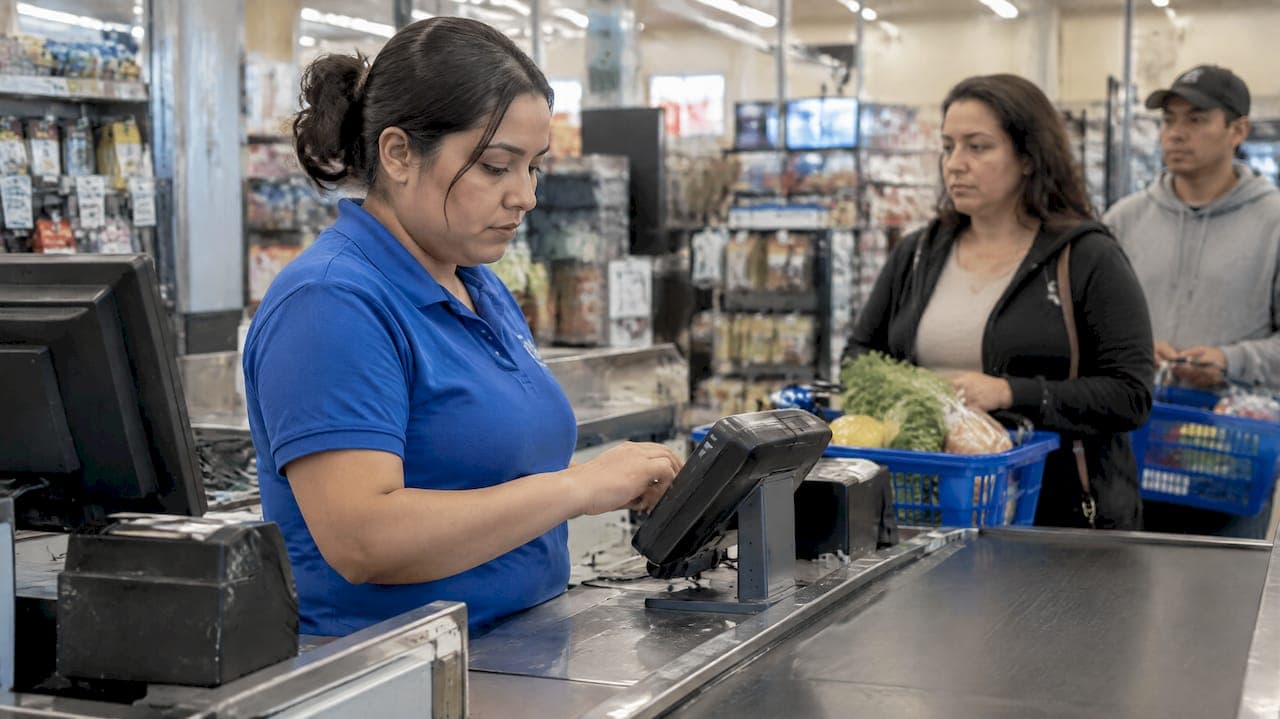
Cut Store Network Downtime to Minutes, Not Hours for Retail ChainsStore network downtime is any period when transactional or critical store systems, including point-of-sale, payment gateways, inventory sync, or camera feeds, go unavailable. The immediate priority is keeping payment capability alive, whether through redundant connectivity or a tested offline fallback. The longer-term fix is a combination of redundant links, documented runbooks, and continuous monitoring that shortens every outage that still happens.
TL;DR:
- Stores with redundant links, offline payment modes, and regular configuration audits significantly reduce the duration and impact of outages.
- Implementing a three-zone network architecture with prioritized traffic prevents failures in one zone from affecting critical systems like POS and payment processing.
- Dual-provider connections, SD-WAN, and cellular backups are the most effective redundancy options for minimizing revenue loss during outages.
- Real-time monitoring, detailed runbooks, and regular failover drills are essential for quickly restoring store operations and minimizing transaction losses.
- Most outages stem from ISP or hardware failures, configuration drift, or third-party provider issues, making diverse connectivity strategies critical for resilience.
Table of Contents
- What Network Downtime Actually Costs a Store
- What Causes Store Network Outages in the First Place
- Building a Store Network That Contains Failures
- Redundancy Options That Keep Stores Selling
- Monitoring and Runbooks That Shrink Repair Time
- Putting a Dollar Figure on Downtime Risk
- Testing the Plan Before You Need It
- A Field Perspective on Store Downtime
- How We Help Stores Cut Downtime to Minutes, Not Hours
- FAQ
- Sources
What Network Downtime Actually Costs a Store
A store that loses its network connection doesn't just lose internet access. It loses the ability to authorize cards, sync inventory counts, and record footage from the cameras that protect against theft and liability claims. Within minutes, checkout lines back up, some shoppers walk away, and others simply leave items behind.
The direct loss is the easiest to picture: a register that can't process a card is a register that isn't selling. But the second-order effects often cost more over time. A store running on paper tickets or a manual card imprint during an outage faces a reconciliation headache afterward, matching slips to bank statements, catching duplicate charges, and absorbing a higher rate of chargebacks tied to delayed or manual authorization. If the camera system drops during the same window, there's a gap in the surveillance record that can matter a great deal if a theft or injury claim surfaces later.
Outages also carry a quieter cost: shoppers who have a bad experience at the register tend to remember it, and repeated incidents erode the convenience reputation a store depends on.
The scale of this risk isn't limited to a single store's own equipment. Federal Reserve analysis of service-provider connections found that an outage at a single service provider can produce wide second-order effects across firms that aren't even direct clients of that provider, which is why modeling provider connections matters when estimating how exposed a given store or chain really is.
A single payment-processor outage can ripple across merchants who have no direct relationship with that provider, according to Federal Reserve modeling of payment networks. That means a store's downtime risk isn't just a function of its own equipment and carrier contract, it's also a function of how concentrated its payment and connectivity vendors are across the broader network.
Breaking the impact down into categories helps when building a mitigation case for leadership:
- Lost transactions: sales abandoned at checkout or during browsing when systems won't respond.
- Labor inefficiency: staff manually processing payments, reconciling tickets, or fielding complaints instead of serving customers.
- Reconciliation and chargeback risk: manual or delayed authorization methods increase disputed and duplicate charges.
- Surveillance gaps: missing NVR footage during the outage window weakens loss-prevention and liability defense.
- Customer trust erosion: repeated outages push shoppers towards competitors with more reliable checkout experiences.
Later in this article, we'll walk through a simple formula for turning these categories into a dollar estimate you can use for budget conversations.
What Causes Store Network Outages in the First Place
Most store outages trace back to a short list of root causes, and matching symptoms to the right one early saves significant troubleshooting time.
- ISP and backbone outages. A carrier-level failure, regional fiber cut, or routing incident upstream of the store can take down connectivity even when every piece of in-store hardware is working correctly.
- Local hardware failure or power loss. A failed switch, router, or access point, or a power event without battery backup, can isolate a store even while the rest of the network is healthy.
- Configuration drift. Firmware updates, expired certificates, and VLAN or failover settings that quietly diverge from the documented baseline are a common and underappreciated cause of outages that seem to appear out of nowhere.
- Third-party and processor outages. Payment processors, cloud POS platforms, and other vendor services sit outside a store's direct control, yet an outage on their end looks identical to a local one from the register's perspective.
- Ransomware and security incidents. A compromised device or credential can force an emergency network shutdown, turning a security event into an availability event.
Fiber cuts and regional ISP incidents tend to produce the longest outages because repair depends on a third party's crew and schedule. Local hardware and power failures are usually faster to resolve if spares and UPS units are on hand. Configuration drift is the sneakiest category: nothing physically breaks, but a certificate expiration or a failover rule that was quietly changed during a routine update leaves a store vulnerable the next time its primary link blips.
Building a Store Network That Contains Failures
A common design pattern for limiting how far a single failure spreads is a three-zone architecture: one network segment for store operations and POS traffic, a second for camera and NVR systems, and a third for guest Wi-Fi. Each zone gets its own addressing, policies, and, ideally, its own path to the internet or at least its own prioritized queue on a shared link.
The logic is straightforward. Guest Wi-Fi traffic is unpredictable and sometimes abused; it should never be able to starve bandwidth from a payment transaction or crash a shared switch that also carries POS traffic. Camera feeds are bandwidth-heavy but not transaction-critical in the same way, so they can degrade gracefully without halting sales. POS and payment traffic get the tightest segmentation, the strictest firewall rules, and the highest QoS priority on whatever connection is active.
Segmentation also supports faster recovery. When operations, cameras, and guest Wi-Fi sit on separate VLANs with clear firewall boundaries, a problem in one zone doesn't require troubleshooting the whole store, and restoring the POS zone first gets a register back online without waiting on camera or guest traffic to stabilize.
Key elements of a resilient store edge:
- Dedicated VLANs for POS, cameras, and guest Wi-Fi with firewall rules that prevent cross-zone traffic by default.
- QoS policies that guarantee payment traffic priority over guest browsing and video streaming.
- Redundant edge hardware so a single switch or router failure doesn't take down an entire zone.
- Documented baseline configurations that make drift easy to detect during routine audits.
Pro Tip: Run a quarterly audit comparing live switch and firewall configs against your documented baseline. Drift is often invisible until it causes an outage.
Redundancy Options That Keep Stores Selling
Architecture limits how far a failure spreads, but redundancy is what keeps a store transacting when the primary connection goes down entirely. A few approaches dominate in practice, each with its own trade-offs.
Dual-provider links with automatic failover. Pairing a primary fiber or cable connection with a secondary link from a different carrier protects against the single biggest cause of outages: a problem with one provider's infrastructure. Automatic failover, where a router or SD-WAN appliance detects the primary link's failure and reroutes traffic within seconds, matters more than redundancy alone; a secondary link that requires manual intervention to activate can sit unused for the first critical minutes of an outage.
SD-WAN for multi-site routing and observability. For chains running more than a handful of locations, SD-WAN centralizes policy-based routing, so failover rules, QoS settings, and security policies can be pushed to every store from one console instead of configured link by link. It also gives IT teams a single pane of visibility into link health across every site, which shortens the time between an outage starting and someone noticing. Our guide to retail connectivity solutions covers backup internet and automatic failover patterns in more depth.
Cellular failover. A 4G or 5G backup link is a practical third layer, particularly for stores where a second wired provider isn't available or cost-justified. The planning details matter: data plans need enough throughput to run POS and at least basic card authorization, NAT and firewall rules need to allow the failover path without creating a security gap, and per-GB costs need to be modeled against how often and how long failover actually triggers.
Offline and hybrid payment modes. Some payment systems support a limited offline mode that stores transactions locally and settles them once connectivity returns. Federal Reserve research on offline payments found that these modes can mitigate short outages but still require eventual online settlement, and they shift fraud and settlement risk onto the merchant for the duration of the outage. They are a bridge for a brief gap, not a substitute for resilient connectivity.
One stat worth remembering: outage impact compounds with network concentration. Federal Reserve modeling shows that disruption at one provider can spread across firms with no direct relationship to it, which is a strong argument for diversifying carriers rather than consolidating every link with a single vendor.
- Dual-provider failover protects against carrier-level outages, the most common root cause.
- SD-WAN centralizes policy and visibility across every store in a chain.
- Cellular backup covers gaps where a second wired line isn't practical.
- Offline payment modes buy time during short outages but carry merchant-side risk.
Choosing between managed services and a do-it-yourself stack usually comes down to how much in-house engineering time is available. A managed provider with SLA-backed uptime and 24/7 monitoring shortens the time between failure and fix; a DIY stack can work but puts the burden of monitoring, patching, and dispatch entirely on internal staff.
Monitoring and Runbooks That Shrink Repair Time
Redundancy reduces how often a full outage happens. Monitoring and runbooks reduce how long each one lasts once it starts. NIST's guidance on cybersecurity event recovery makes the point directly: technical recovery is only one part of incident response, and organizations should prioritize business-critical assets so recovery effort focuses first on the systems that most directly affect revenue, which for a store means POS before cameras or guest Wi-Fi.
What to monitor, at minimum:
- Link health on every active and backup connection, including latency and packet loss, not just up or down status.
- Application reachability for the POS platform and payment gateway specifically, since a link can be up while the application itself times out.
- NVR and camera status to catch recording gaps before they become a liability problem.
- Payment gateway connectivity as a distinct check from general internet reachability, since processor-side issues look identical to a local outage.
A usable runbook needs a prioritized recovery list (POS first), step-by-step failover instructions a non-specialist can follow, and a contact and escalation tree with named roles, not just a generic help desk number. Our guide to business continuity network solutions and our runbook tuning guide for multi-site failover both cover templates worth adapting.
Pro Tip: Set a clear threshold for when remote diagnosis stops and a field dispatch starts. Without one, techs get sent for issues that resolve remotely, and sites wait too long for issues that need hands on the equipment.
SLAs and vendor contracts should map directly to runbook roles: if a contract promises a four-hour response window, the runbook should name who confirms that window was met and who escalates if it wasn't.
Putting a Dollar Figure on Downtime Risk
A simple formula turns abstract risk into a number leadership can act on: lost transactions per hour multiplied by average ticket size, multiplied by outage duration in hours, multiplied by a disruption coefficient that accounts for partial mitigation already in place.

Say a store averages 40 transactions per hour at a $35 average ticket, and a particular location has no backup connectivity. A two-hour outage with a disruption coefficient reflecting that some shoppers would return later or pay by other means results in an estimated lost sales amount calculable by lost transactions per hour multiplied by average ticket size, outage duration, and disruption coefficient. Run the same formula across every store in a chain and a pattern of exposure emerges quickly.
The coefficient itself should move with your redundancy posture. A store with no backup link and no offline payment mode justifies a coefficient close to 1.0, since almost every transaction during the outage is lost outright. A store with cellular failover and a tested offline mode might justify 0.3 to 0.5, since some transactions still complete, just more slowly.
- Formula: lost transactions/hour × average ticket × outage hours × disruption coefficient.
- Coefficient guidance: closer to 1.0 with no redundancy, lower as backup links and offline modes are proven to work.
- Recovery priority: POS and payments first, inventory sync second, cameras third, guest Wi-Fi last.
- Insurance consideration: business interruption coverage can offset losses, but policies often carry waiting periods and exclusions for outages tied to third-party providers rather than physical damage, so the fine print matters.
This framework pairs well with NIST's recommendation to prioritize business-critical assets during recovery: the systems you restore first should be the same ones driving your largest dollar exposure.
Testing the Plan Before You Need It
A resilience plan is only as good as the last time it was actually tested under real conditions.
- Run scheduled failover drills that force traffic onto the backup link and confirm POS and payment traffic survive the switch.
- Test offline or hybrid payment reconciliation end to end, including how quickly stored transactions settle and how retention limits apply.
- Apply change control to firmware and certificate updates so drift doesn't creep in between tests.
- Document every drill result and update the runbook immediately when a step fails or takes longer than expected.
A Field Perspective on Store Downtime
The biggest blind spot in multi-location retail isn't the lack of a backup link. It's an untested one, paired with a runbook nobody has opened since it was written. A single point of contact and centralized observability cut triage time because nobody wastes the first twenty minutes figuring out which vendor to call.
— Jim
How We Help Stores Cut Downtime to Minutes, Not Hours
We built our approach around the gap we see most often in retail networks: redundancy that exists on paper but has never been tested under real failure conditions. Our Managed SD-WAN gives multi-location teams policy-based failover and a single view of link health across every store, backed by dedicated fiber or business fiber as a primary connection and cellular backup where a second wired line isn't practical. Our Managed WiFi handles the segmentation that keeps guest traffic from ever touching POS systems.Our Netverge monitoring platform gives your team real-time visibility into every link, every site, from one dashboard, and our 24/7 U.S.-based NOC and triple-CCIE engineers are already watching before a store manager notices a slow register.
- Managed SD-WAN for policy-based failover and multi-site visibility.
- Dedicated fiber and cellular backup for layered redundancy at the store edge.
- Netverge monitoring for real-time alerts before an outage becomes a lost sale.
| Service | What it addresses |
|---|---|
| Managed SD-WAN | Policy-based failover and centralized routing across stores |
| Dedicated Fiber Internet | High-bandwidth primary connectivity with SLA-backed uptime |
| Managed WiFi | Segmentation that isolates guest traffic from POS |
| Netverge Monitoring | Real-time link and application health across every site |
Pro Tip: Ask any connectivity vendor what their mean time to repair actually looks like in practice, not just what the SLA promises on paper. Our guide to MTTR benchmarks is a useful reference when comparing vendor claims.
Multi-location businesses don't need more vendors. They need one engineer who already knows their network when something breaks.
If your stores are running on untested redundancy or a patchwork of carrier contracts, start a free consultation and we'll walk through where your current setup is exposed.
FAQ
What does network downtime mean for a retail store?
Network downtime means any period when a store's internet-dependent systems, including POS, payment authorization, inventory sync, or camera feeds, can't communicate normally. For retail, the most urgent concern is payment capability, since that's what directly stops sales.
Is something wrong with the Microsoft Store today?
Availability of a specific platform like the Microsoft Store varies day to day and isn't something this article tracks; check the provider's own status page for current service health. The principles here apply to any store-level network outage regardless of which platform or app triggered it.
Is the Apple Store experiencing an outage right now?
Real-time outage status for a specific retailer or platform changes constantly and should be checked directly on that provider's status page. The causes and mitigation strategies covered here, redundant connectivity, monitoring, and tested runbooks, apply whether the outage originates locally or with a third-party platform.
Why might a store's network not be working today?
The most common causes are an ISP or backbone outage, a local hardware or power failure, configuration drift such as an expired certificate, or an outage at a third-party payment processor or cloud service. Checking link health, application reachability, and payment gateway status separately usually narrows down the cause quickly.
How can a store estimate the cost of a network outage?
A practical formula is lost transactions per hour multiplied by average ticket size, multiplied by outage duration, multiplied by a disruption coefficient reflecting existing redundancy. Lower coefficients apply to stores with tested backup links and offline payment modes, since fewer sales are fully lost during the outage.
Sources
- NIST Guide for Cybersecurity Event Recovery (SP 800-184)
- Using service provider connections to model operational payment networks (Federal Reserve)