
Network Teams: 5 Step Carrier Diversity Verification Backed by NISTIf you bought two circuits from two carriers assuming that counts as diversity, there's a good chance both still run through the same conduit somewhere between your building and the network core. The fix starts now: request each carrier's physical route documentation or splice records, or schedule a field trace, and compare the paths before you trust them. NIST SP 800-53's CP-8 control backs this approach directly.
TL;DR:
- Compare geospatial exports for intersecting routes, shared manholes, building entries, or paths within a few hundred feet, where one incident could sever both circuits.
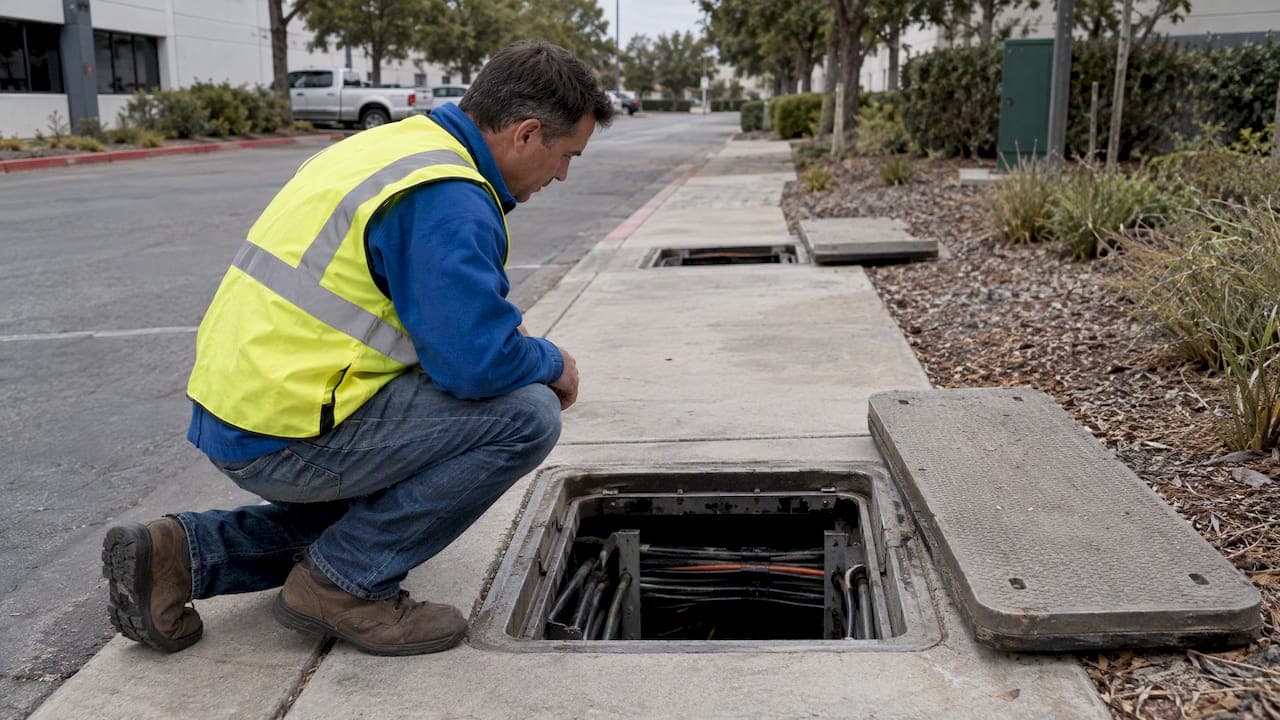
- When route records are incomplete or inconclusive, conduct a field trace and collect GPS photos of splice points, pole labels, and manhole lids.
- Require certified route records, field trace rights, signed as built documentation, and remedies for noncompliance in contracts; verify delivered records before cutover.
- Audit critical circuits annually, and repeat checks after nearby construction, carrier ownership changes, backbone rerouting, or shifts in building tenancy.
- No universal diversity certification or numeric score exists, so judge claims against documented route separation, splice identifiers, and stated distance thresholds.
Table of Contents
- What carrier diversity usually means, and why that can be misleading
- Why physical verification matters for risk and compliance
- Step-by-step verification process network teams can follow
- Contract and procurement checklist to lock in verifiable diversity
- Ongoing assurance: monitoring, audits, and simplifying verification
- Field lessons from carrier diversity audits
- How we can help verify your carrier diversity
- FAQ
- Sources
What carrier diversity usually means, and why that can be misleading
Carrier diversity means buying service from two or more different providers. Route diversity, or physical diversity, means those services travel through genuinely separate physical paths from your building to the network. The two are not the same thing. A business can hold contracts with two different carrier names and still lose both circuits in a single backhoe strike, because both leased space in the same duct from a third-party infrastructure owner.
The convergence points that undo diversity assumptions tend to cluster in predictable places:
- Last-mile conduit shared between carriers under municipal streets
- Shared manholes or handholes where multiple providers splice into the same vault
- A single building entry point or riser serving every tenant circuit
- Meet-me rooms or points of presence where carrier backbones physically cross
- Aggregated middle-mile segments that converge before reaching diverse-looking endpoints
A retail chain that loses connectivity at every register during a single fiber cut usually finds the cause in one of these five spots, not in a carrier failure.
Why physical verification matters for risk and compliance
Verification isn't paperwork for its own sake. It closes the gap between what a sales contract implies and what actually happens when a backhoe hits a line. NIST SP 800-53's CP-8(3) control specifically calls for separating primary and alternate telecommunications providers so they don't share the same failure domain, and it asks organizations to confirm geographic separation rather than assume it.

FCC reliability guidance and CSRIC recommendations call for periodic circuit diversity audits and tagging of critical circuits, particularly for 911 and other life-safety services. That standard reflects a simple reality: circuits that look redundant on paper routinely fail together when the underlying infrastructure wasn't actually separated.
Verification costs time and money, so it makes the most sense where the stakes justify it: life-safety circuits, payment processing, primary data center links, and any connection whose outage carries a direct revenue or compliance consequence. A satellite office with a single low-traffic application may not need the same rigor as a hospital's emergency dispatch line.
Step-by-step verification process network teams can follow
Confirming true physical diversity is a documentable process, not a judgment call. Here's the sequence that produces defensible evidence.
- Assemble your circuit inventory. Collect circuit IDs, splice IDs, manhole IDs, and TSP codes for every connection you're evaluating.
- Request geospatial exports from each carrier. Ask for GIS shapefiles, route coordinates, or splice ID lists rather than a marketing map.
- Cross-compare the exports for overlap. Look for intersecting paths, shared manholes, or proximity below a set threshold, often a few hundred feet, where a single incident could sever both.
- Schedule and conduct a field verification. Walk the route and confirm what the exports claim.
- Document findings and issue a diversity determination. Record what was verified, what wasn't, and require remediation or contractual remedy for any gap.
During the field walk, collect:
- GPS-tagged photos of manhole lids, pole tags, and splice points
- Splice ID labels cross-referenced against carrier inventory
- Notes on any point where two carriers' routes run within a few feet of each other
Pro Tip: Ask for splice IDs before you ask for a route map. Carriers can redraw a map; they can't relabel a splice that's already in the ground.
Manual verification like this isn't instant. A single-site audit with two carriers might take some time and considerable engineering effort. A multi-site enterprise audit across multiple critical locations can stretch longer and incur high costs. This is largely because no universal cross-carrier circuit identifier exists yet to automate the comparison, a gap the ATIS Network Diversity Assurance Initiative documented when it reviewed federal diversity assessments.
Contract and procurement checklist to lock in verifiable diversity
The best time to require proof of diversity is before you sign, not after an outage. Build these protections into new contracts and renewals.
- Require certified route exports as a condition of the contract, not a courtesy
- Reserve the right to an on-site field trace before final acceptance
- Negotiate service credits or penalties tied to diversity noncompliance discovered later
- Obligate the carrier to an annual re-audit for circuits flagged as critical
Before cutover, require signed as-built documentation, verified splice photos, and a manhole or pole ID list that matches the carrier's own export. Anything that doesn't match on delivery is a remediation item, not a footnote.
Pro Tip: Use TSP (Telecommunications Service Priority) tagging on critical circuits. It won't prevent a cut, but it moves your restoration to the front of the line when one happens.
For guidance on designing the redundancy itself once diversity is confirmed, our network redundancy design guide walks through standards-aligned architecture choices.
Ongoing assurance: monitoring, audits, and simplifying verification
A diversity determination made once at signing goes stale. Construction near your building, a carrier merger, or a change in tenancy can quietly erase the separation you verified a year ago.
Reasonable audit triggers include:
- An annual review for any circuit flagged as critical
- A fresh check after nearby construction or utility work
- A re-verification whenever a carrier changes ownership or backbone routing
- A review at lease renewal if the building's tenancy or risk profile shifts
For multi-location businesses, centralizing this work removes a lot of the friction and ensures compliance with essential business continuity standards. We source from multiple carriers, which gives us room to choose genuinely separate paths rather than defaulting to whichever provider is already in the building. Every design runs through engineers, and a 24/7 U.S.-based NOC keeps watch on the circuits once they're live, backed by a 99.99% uptime SLA on data service. Our distributor consolidation case study shows how that single-point-of-accountability model plays out for a multi-site business managing exactly this kind of complexity.
Field lessons from carrier diversity audits

Most audits turn up the same three problems: circuits that share a ductbank the carrier didn't flag, labels that don't match the physical splice, and splice records that simply don't exist because nobody kept them. None of that surprises me anymore.
The fastest filter for an IT team is to ask for splice IDs and GPS-tagged photos before anything else. If a carrier hesitates on either, escalate to your risk committee before you sign, not after the first outage.
— Jim
How we can help verify your carrier diversity
Running a full field trace across every location you manage takes time most IT teams don't have. This work can include coordinating field verification, consolidating carrier documentation into one record, and backing the result with 24/7 U.S.-based NOC monitoring so a diversity gap gets caught before it becomes an outage.Bring your circuit inventory, any existing as-builts, your service addresses, and current carrier contacts to a consultation, and we'll map out what's actually diverse and what isn't. Explore our Managed SD-WAN or Dedicated Fiber Internet options for sites that need a genuinely separate path, or schedule a free consultation to start the review.
FAQ
What does "diversity certified" mean for a carrier circuit?
There's no single universal certification; it typically means a carrier or third party has documented and verified that a circuit's physical route doesn't share conduit, manholes, or entry points with another specified circuit. Ask for the underlying splice IDs and route maps behind any diversity claim rather than accepting the label alone.
What does a higher score on a diversity scale indicate?
In carrier verification, there's no standardized numeric diversity score; assessments are typically pass/fail determinations based on documented physical separation. A provider claiming a "score" should be asked what specific route data and distance thresholds produced it.
How do I verify that two carriers are physically diverse, not just contractually separate?
Request geospatial route exports or splice ID lists from each carrier, then compare them for overlapping conduit, shared manholes, or a single building entry point. Where the exports are inconclusive, a physical field trace, walking the route and photographing splice points, remains the most reliable confirmation method according to the ATIS Network Diversity Assurance Initiative.
How often should carrier diversity be re-audited?
An annual review is reasonable for circuits flagged as critical, with additional checks triggered by nearby construction, a carrier ownership change, or a building tenancy change. FCC reliability guidance recommends periodic audits rather than a one-time check at signing.
What is TSP tagging and why does it matter for diversity?
Telecommunications Service Priority tagging flags a circuit as critical so it receives prioritized restoration after an outage. It doesn't prevent a physical cut, but CSRIC transport recommendations note it meaningfully improves recovery speed for circuits that carry it.
Sources
Defensible proof of diversity rests on specific artifacts, not a carrier's assurance over email.
- FedRAMP reference: Contingency planning (CP) controls — NIST SP 800-53
- ATIS Network Diversity Assurance Initiative (NDAI) Final Report
- FCC 26-39: Reliability standards and NG911 guidance
Geospatial comparison, overlaying route exports and checking for intersections or proximity under a set distance, catches most obvious overlaps quickly. It has limits: a carrier's export can be outdated, mislabeled, or simplified in ways that hide a shared trench. That's where last-mile route detail matters most, since last-mile segments are where convergence happens most often.
Third-party verification services can automate parts of this comparison, but a true field trace, someone physically walking the route and photographing splice points, remains the standard the ATIS NDAI report points to for end-to-end assurance in multi-carrier environments.