
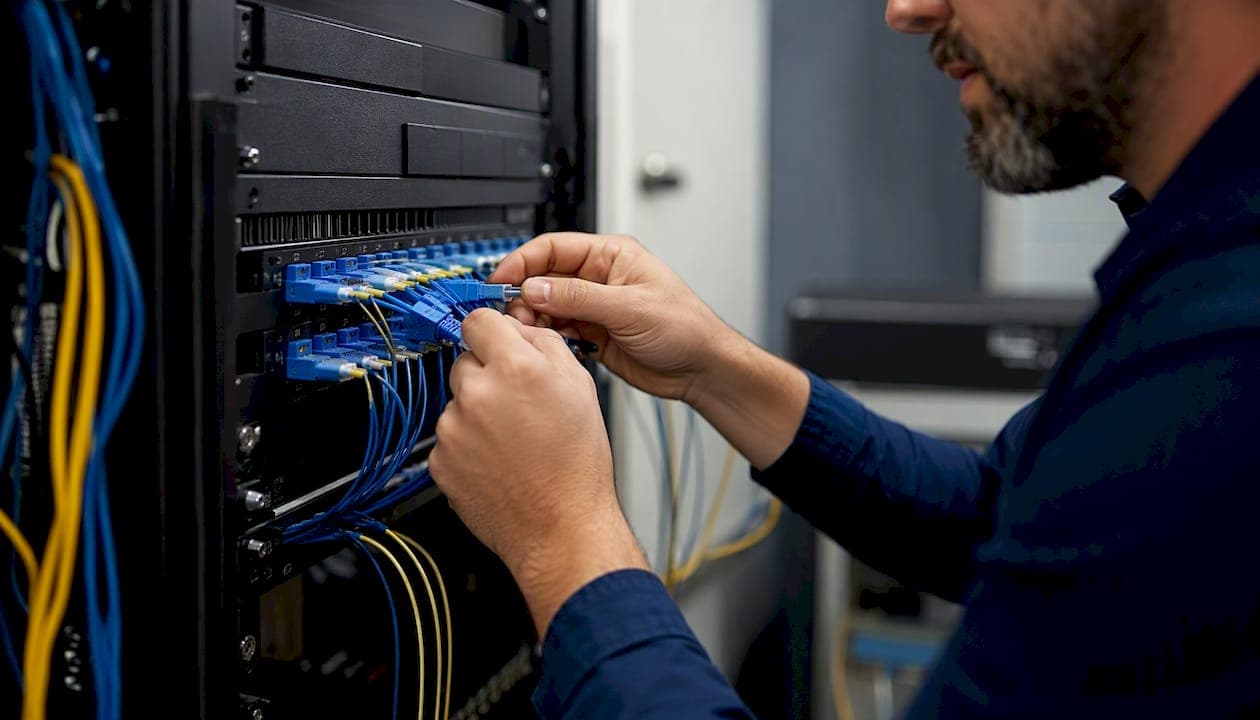
Network Edge Definition: What IT Leaders Need to KnowThe network edge is the physical or logical demarcation where an enterprise-owned network connects to third-party networks, including the public internet, carrier WAN links, and public cloud on-ramps. Per TechTarget's framing, it is best understood not as a single device but as one or more security boundaries that define who controls the infrastructure on each side. Edge computing is a related but separate concept: it describes distributed compute and storage placed close to users or data sources specifically to reduce latency, not to mark an ownership boundary.
Fortinet describes the network edge as the connection point between a local network and the internet, and treats it as a critical security boundary. That framing holds whether you are running a single corporate campus or 200 branch locations across the country.
Key Takeaways
The network edge is a set of ownership and security demarcations, not a single device, and managing it well requires clear policy, per-site observability, and SLAs that match the cost of a site outage.
| Point | Details |
|---|---|
| Edge = demarcation, not a device | The network edge marks where enterprise control ends and third-party networks begin, across multiple boundary types. |
| Edge computing is separate | Edge computing places workloads near users for low latency; it is not the same as changing a network demarcation. |
| Device diversity amplifies risk | IoT gateways, CPE, and unmanaged endpoints each expand the attack surface and require active firmware lifecycle management. |
| Observability must be built in | Centralized per-site dashboards and flow data are prerequisites for effective edge operations, not optional add-ons. |
| Pilot before you scale | Define latency and availability KPIs, instrument traffic baselines, and validate SLAs at two or three sites before a full rollout. |
Table of Contents
- What does the network edge definition actually cover?
- How does the network edge differ from edge computing?
- What devices and components live at the network edge?
- How does traffic actually flow through the network edge?
- Why managing the network edge pays off
- What are the security and operational risks at the network edge?
- Where does network edge design matter most?
- What should you expect from a managed network services provider at the edge?
- How to design and evaluate your edge strategy
- The edge mistakes that actually cost teams time
- Useful standards, guidance, and reference reading
- Sources
What does the network edge definition actually cover?
The term "network edge" shows up in vendor docs under several labels, and each one carries slightly different ownership and policy implications. Understanding the variants prevents misaligned vendor conversations and gaps in monitoring coverage.
Internet edge (or DIA edge): The point where your enterprise network exits to the public internet through a dedicated internet access circuit. Your firewall, border router, and any inline security stack typically sit here. Your team owns the equipment on the inside; the carrier owns the circuit and the handoff port.
WAN edge: The demarcation between your enterprise WAN (MPLS, SD-WAN overlay, or private carrier network) and your internal LAN fabric. SD-WAN appliances and edge routers live here. Ownership can be split: the CPE may be enterprise-managed or carrier-managed depending on the contract.
Public cloud egress: Where traffic leaves your network toward AWS, Azure, or Google Cloud. This boundary is increasingly virtual, defined by routing policy and cloud gateway configuration rather than a physical device you rack.
Partner peering and B2B interconnects: Dedicated circuits or VPN tunnels to partners, suppliers, or payment processors. These carry their own policy and logging requirements, often driven by compliance frameworks like PCI DSS.
Access and branch edge: The uplink from a remote site or branch office to any of the above. This is where CPE, wireless access points, and local security controls sit closest to end users.
3GPP notes that the practical scope of "edge" can range from end devices like sensors and smartphones all the way to local data centers and access-network elements, depending on how an architecture is defined. That flexibility is why multi-layer edge designs are common in practice: a large enterprise may have meaningful demarcations at the branch CPE, the regional aggregation point, and the internet exit simultaneously.
NetScout's glossary draws a useful distinction between the network edge and the network perimeter: the edge is the physical or logical boundary point, while the perimeter is the security policy enforced at that boundary. Conflating the two leads to coverage gaps when a new edge type (say, a cloud egress point) gets added without a corresponding perimeter policy update.
Pro Tip: Map every edge type in your environment to a named owner, a monitoring hook, and an incident playbook before you add a new one. An internet edge without a logging destination is a blind spot, not just a gap.
For a provider-focused view of how these edge types translate to operational responsibilities, the role of edge networking for IT managers is worth reading alongside this definition.
How does the network edge differ from edge computing?
The confusion between these two terms produces real architectural mistakes, so the distinction deserves a direct treatment.
The network edge is about demarcation and ownership: it answers the question "where does my network end and someone else's begin?" Edge computing is about compute placement: it answers "where should I run this workload to minimize latency for the end user?" A branch firewall is a network edge device. A Multi-access Edge Computing (MEC) node deployed at a mobile aggregation point is edge computing infrastructure.
| Dimension | Network edge | Edge computing |
|---|---|---|
| Primary purpose | Ownership and policy demarcation | Low-latency compute and storage placement |
| Typical location | CPE, border router, cloud gateway | MEC node, base station, local micro-data center |
| Who controls it | Enterprise, carrier, or shared | Cloud provider, carrier, or enterprise |
| Key design question | Who owns this boundary and enforces policy? | Where should this workload run? |
| Relevant standards | 3GPP, CISA, NIST | ETSI MEC, 3GPP, IETF |
| Performance goal | Reliability, security, compliance | Latency reduction, bandwidth efficiency |
The practical decision rule: if your project is about changing where traffic exits your network or who manages a circuit, that is a network edge project. If it is about moving a workload or application server closer to users, that is an edge computing project. The two can overlap, but they require different vendor conversations and different SLAs. TechTarget's analysis makes this separation explicit: edge computing is infrastructure separate from the corporate network, built specifically for real-time analysis.
What devices and components live at the network edge?
A practical inventory matters because each device category carries different management obligations, firmware cycles, and ownership questions.
- Customer Premises Equipment (CPE): The physical device at a branch or remote site that terminates a carrier circuit. May be enterprise-owned, carrier-provided, or managed by a third party. Firmware lifecycle is a common gap.
- Edge routers: Handle BGP peering, route policy, and traffic handoff at internet or WAN edges. Typically enterprise-managed at large sites; carrier-managed at smaller branches.
- Edge switches: Aggregate local LAN traffic before it reaches the WAN or internet edge. Usually enterprise-owned; relevant for VLAN segmentation and QoS policy.
- Firewalls and NGFWs: Enforce security policy at the internet edge and increasingly at WAN and cloud egress points. Fortinet's NGFW line is a common choice at enterprise internet edges; policy management across distributed sites is the operational challenge.
- SD-WAN appliances: Overlay devices that apply policy-based path selection across multiple WAN circuits. They sit at the WAN edge and are the primary tool for local breakout and carrier diversity.
- Wireless access points: Technically inside the LAN, but they extend the edge to mobile and IoT devices. Their management plane is often separate from the wired edge stack.
- IoT gateways and sensors: Aggregate data from industrial sensors, cameras, and environmental monitors. Often the least-patched devices at the edge; a significant attack surface.
- Mobile base station interfaces: Relevant when an enterprise operates private 5G or connects directly to a carrier's RAN. The interface between enterprise and carrier infrastructure is a network edge demarcation.
- Branch servers and local compute: Servers running local applications, caching, or analytics at a branch. These blur the line between network edge and edge computing.
For IoT and mobile endpoints specifically, eSIM technology is reshaping how devices connect at the edge. The role of eSIM in IoT covers how remote SIM provisioning affects device management and connectivity at distributed edge locations.
How does traffic actually flow through the network edge?
Understanding the traffic patterns is what lets you place observability hooks correctly and design for failure.

WAN edge and internet edge traffic flows
At the WAN edge, branch traffic traverses the SD-WAN appliance, which applies policy-based path selection across available circuits (MPLS, broadband, LTE backup). Traffic destined for the data center stays on the private WAN; traffic destined for SaaS applications can break out locally at the branch internet edge instead of backhauling to a central exit. That local breakout is the core performance benefit of SD-WAN and the reason the WAN edge and internet edge are increasingly co-located at the branch CPE.
At the internet edge, traffic passes through the NGFW, any inline security stack (IPS, DLP, DNS filtering), and exits to the carrier handoff. Observability hooks here should capture flow data, firewall logs, and BGP state.
Where MEC fits relative to edge demarcations
Multi-access Edge Computing places compute at or near the carrier's RAN, between the device and the core network. CISA's 5G/edge-core guidance describes MEC as extending cloud capabilities to base stations, central offices, and aggregation points to enable low-latency services. From an enterprise perspective, a MEC node sits outside your network edge demarcation: it is carrier or cloud infrastructure. Traffic that reaches a MEC node has already crossed your network edge. That distinction matters for security policy and data residency planning.
Intel describes edge networks as bringing compute, network, and storage resources closer to the point of data creation and consumption, reducing reliance on centralized data centers. Kentik's overview frames this as provisioning compute and storage closer to devices to reduce latency and improve application performance.
| Traffic pattern | Typical latency profile | Enterprise ownership |
|---|---|---|
| Branch to data center via MPLS WAN | Moderate latency | Enterprise owns CPE and WAN policy |
| Local breakout via branch internet edge | Lower latency to SaaS | Enterprise owns CPE; carrier owns circuit |
| Branch to MEC node (5G/LTE) | Very low latency | Carrier or cloud owns MEC; enterprise owns device |
| Branch to public cloud egress | Higher latency | Enterprise owns routing policy; cloud owns gateway |
Pro Tip: Before deploying a latency-sensitive application (video analytics, VoIP, real-time control), run a baseline measurement from the branch to the target endpoint across each available path. SD-WAN path selection is only as good as the performance data it acts on.
For a deeper look at how these patterns translate to enterprise network design, enterprise network design for IT pros covers the architectural decisions in detail.
Why managing the network edge pays off
The business case for deliberate edge management comes down to four operational gains.
- Lower latency for local applications: Local breakout at the branch internet edge cuts the round-trip time for SaaS and cloud applications by eliminating the backhaul to a central exit. For Microsoft 365 or Salesforce, that difference is measurable in user experience.
- Reduced backhaul costs: Routing SaaS traffic locally instead of through a central data center reduces WAN bandwidth consumption. For multi-site organizations, this can meaningfully reduce MPLS circuit costs.
- Improved reliability through carrier diversity: SD-WAN at the WAN edge enables automatic failover between a primary fiber circuit and a secondary LTE or broadband link. A single carrier outage no longer takes a site offline.
- Clearer security policy enforcement: Explicit demarcation points give you defined locations to enforce inspection, logging, and access control. Without them, policy tends to be applied inconsistently across sites.
What are the security and operational risks at the network edge?
The edge is where most enterprise breaches begin, and the risk profile is getting harder to manage.
Device diversity is the first problem. Every CPE, IoT gateway, camera, and sensor is a potential entry point. Statista's data on IoT-connected devices worldwide illustrates the scale: the global count of IoT-connected devices runs into the billions, and each one represents a potential edge endpoint that needs firmware management, authentication, and monitoring. Most organizations are not patching these devices on any consistent schedule.
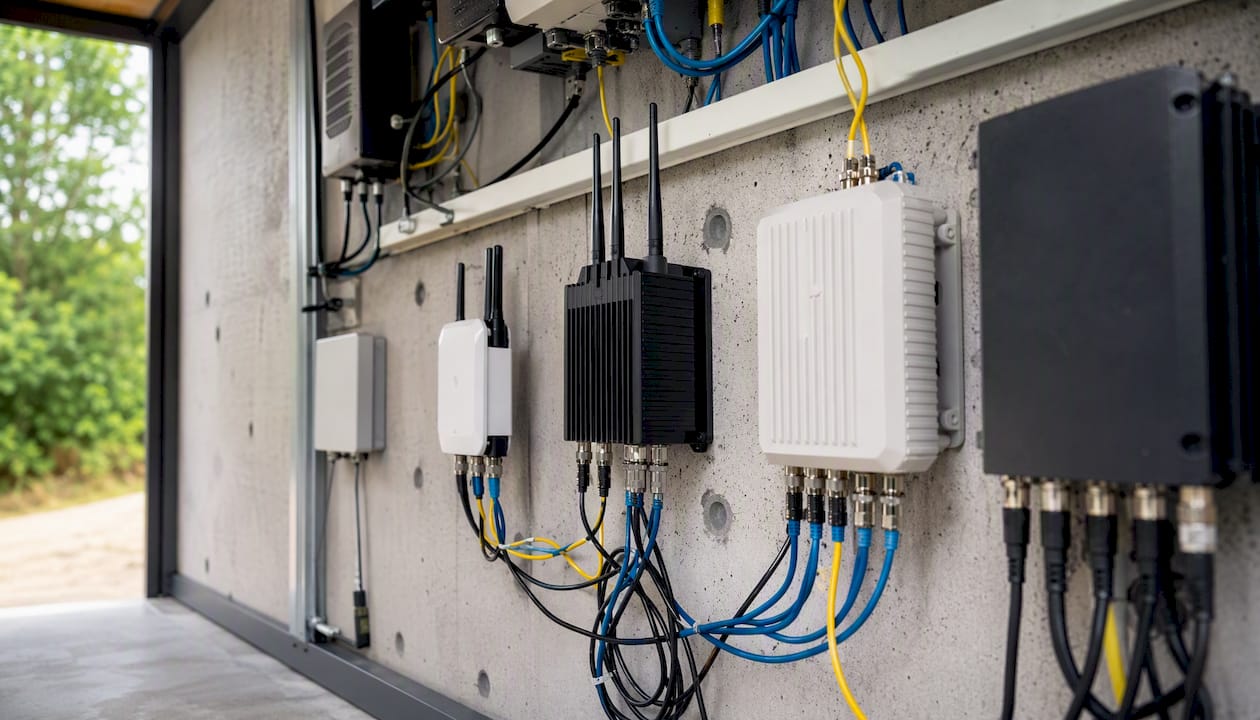
5G and RAN supply-chain risk adds a layer that many enterprise teams are not yet accounting for. CISA's 5G/edge-core security guidance warns explicitly that integrating core-like functions into the RAN and edge blurs the boundaries between trusted and untrusted infrastructure, and recommends avoiding untrusted components and using vetted suppliers. When a carrier's edge node is processing traffic that would previously have stayed inside your core, the trust model changes.
Operational complexity scales with the number of edge sites. Firmware patching across hundreds of CPE devices, maintaining consistent firewall policy across internet edges at every branch, and correlating logs from distributed devices into a coherent incident timeline are all harder than they look in a single-site design. The network security protocols article covers the protocol-level controls that apply at these boundaries.
3GPP's standards work on edge computing and CISA's guidance both point toward the same mitigation: treat each edge demarcation as a defined security zone with explicit policy, logging, and a named owner. That is easier to say than to implement across 50 sites, which is why managed-service providers with distributed NOC coverage are a practical answer for many organizations.
Where does network edge design matter most?
The edge architecture decisions that matter most vary by industry, but the underlying pattern is consistent: the closer a workload or transaction is to the physical world, the more the edge design affects the outcome.
- Retail: Point-of-sale systems need reliable local connectivity even when the WAN is degraded. Video analytics for loss prevention generates high-bandwidth local traffic that should not backhaul to a central data center. Local caching for product catalog data reduces dependency on cloud availability.
- Manufacturing and industrial automation: Control loops for robotic systems and CNC equipment require sub-10 ms latency that only local processing can deliver. Telemetry aggregation from sensors should happen at a local edge gateway before data is forwarded upstream.
- Healthcare: Medical imaging generates large files that are expensive to backhaul and subject to HIPAA data residency requirements. Local edge demarcation lets compliance teams define exactly where PHI leaves the facility network. Healthcare network services that account for these requirements at the design stage are significantly easier to audit.
- Branch office and multi-site businesses: SD-WAN local breakout at each branch reduces latency for cloud applications and provides carrier redundancy. The WAN edge at each site is the primary management and policy enforcement point.
- 5G and MEC-enabled services: Telemetry aggregation, augmented reality, and autonomous logistics all depend on MEC nodes placed at or near the RAN. 5G connectivity enables the sub-5 ms latency these applications require, but only when the application workload is co-located with the MEC node rather than running in a central cloud.
What should you expect from a managed network services provider at the edge?
Managed network services at the edge should cover more than circuit provisioning. Here is what a capable provider actually delivers and the questions worth asking before you sign.
- Multi-carrier aggregation: A provider sourcing from multiple carriers gives you path diversity and negotiating leverage. Ask how many carriers they can provision at a given site and what the failover SLA looks like.
- SD-WAN configuration and lifecycle: Who configures path selection policies? Who updates them when application requirements change? Who owns the CPE firmware cycle?
- Firewall management: Is the NGFW at each internet edge managed by the provider or handed off to your team? Confirm who holds the policy change workflow and who responds to an alert at 2 AM.
- 24/7 NOC coverage: A network operations center that monitors edge devices in real time is the difference between detecting a circuit failure in seconds and finding out when users call the help desk. Confirm the NOC is U.S.-based if data sovereignty or response time matters.
- Centralized observability: A single dashboard showing per-site circuit health, latency, and device status is not a luxury for multi-site organizations. Ask whether the provider offers custom hardware or software that feeds a unified view.
- Per-site SLAs: A provider-level uptime SLA is meaningless if a specific branch can be down for hours without triggering a contractual response. Require per-site SLA terms.
- Incident response time commitments: Mean time to respond and mean time to restore should be in the contract, not just the sales deck.
The Vergepoint observability platform provides a single-dashboard view across all managed sites, and the 24/7 U.S.-based NOC handles incident response without handoffs between vendors. For multi-location businesses that need one provider, one bill, and one engineer's number, the managed LAN/WAN services page covers the full scope of what that looks like in practice.
Pro Tip: Ask any managed-service candidate to walk you through the ownership boundary at the CPE: who owns the device, who holds the config, and who gets paged when it goes offline. Ambiguity there is a leading indicator of ambiguity everywhere else in the relationship.
How to design and evaluate your edge strategy
A structured approach prevents the two most common mistakes: over-scoping the pilot and under-specifying the SLA.
Decision checklist before you start:
- What are your latency targets for each application category (real-time control, SaaS, video, VoIP)?
- Which edge types exist today (WAN, internet, cloud egress, branch)? Are they all mapped and owned?
- What are your data residency and compliance requirements at each edge?
- What is the cost of a site outage, and does your current carrier diversity match that risk tolerance?
- Is this a network edge project (demarcation/ownership change) or an edge computing project (workload placement)? The answer drives different vendor conversations.
Pilot steps:
- Select two or three sites that represent your typical branch profile.
- Define KPIs before you touch anything: baseline latency per application, circuit availability, mean time to detect a failure.
- Instrument traffic at the WAN and internet edge before making changes so you have a real baseline.
- Deploy SD-WAN or updated CPE at pilot sites with a 30-day SLA window.
- Measure against KPIs, document what broke, and fix the process before rolling out to remaining sites.
- Build the observability and alerting stack in parallel with the pilot, not after.
Scaling and future-proofing considerations:
- Use software-defined policies wherever possible so adding a new site means applying an existing template, not rebuilding from scratch.
- Avoid CPE that locks you into a single carrier or a single SD-WAN vendor's management plane.
- Plan firmware and lifecycle management as a recurring operational cost, not a one-time deployment task.
- Revisit edge demarcations when you add a new cloud provider, a new carrier, or a new application category. Each addition is a potential new edge type.
The edge mistakes that actually cost teams time
The most common failure mode in edge rollouts is not a technology choice. It is unclear ownership.
Teams spend months selecting SD-WAN vendors and almost no time documenting who owns the CPE config, who approves a firewall rule change, and who gets paged when a branch goes dark. Then the first incident reveals that the carrier thinks the enterprise owns the CPE and the enterprise thinks the carrier does. That ambiguity is not a vendor problem; it is a planning problem.
The second consistent gap is missing observability. A network edge you cannot see is a liability. Distributed sites with no centralized telemetry mean your NOC is reactive by definition. The fix is not expensive: a flow collector, a syslog aggregator, and a per-site latency probe cover most of what you need. The discipline to deploy them before the pilot goes live is what most teams skip.
Firmware and patch cycles deserve more attention than they get. IoT gateways and branch CPE running two-year-old firmware are the devices that show up in post-incident reports. Build a quarterly firmware review into your edge operations calendar and treat it the same way you treat server patching.
The practical tip: before any edge project goes to production, run a tabletop exercise with your security, networking, and application teams using a simulated branch outage. The gaps in ownership and escalation paths will surface in 30 minutes around a whiteboard rather than at 11 PM during an actual incident.
FAQ
What is the network edge?
The network edge is a set of ownership and security demarcations — where your network ends and a carrier's, the internet, or a cloud provider's begins. It is not a single device, and managing it well is about clear policy and per-site observability at those boundaries.
How does the network edge differ from edge computing?
The network edge is about demarcation and ownership: where does my network end and someone else's begin? Edge computing is about placing compute close to where data is generated. Conflating the two produces real architectural mistakes.
What devices live at the network edge?
Customer premises equipment terminating carrier circuits, SD-WAN appliances applying path selection across MPLS, broadband, and LTE circuits, and the firewalls enforcing security policy at the boundary. Each category carries its own management obligations and firmware cycles.
Why does deliberate edge management matter?
Two reasons: performance and risk. Local internet breakout at the branch cuts round-trip time for SaaS and cloud applications by eliminating backhaul, and the edge is where most enterprise breaches begin — device diversity makes the risk profile progressively harder to manage.
Useful standards, guidance, and reference reading
The sources below span primary standards, government security guidance, and vendor glossaries. Standards and guidance documents carry more authority for architecture and procurement decisions; vendor glossaries are useful for quick definitions and product-context framing.
Standards and government guidance:
- ETSI MEC (Multi-access Edge Computing) — the primary standards body for MEC architecture, APIs, and deployment patterns. Use this when designing or evaluating MEC-dependent services.
- 3GPP edge computing standards — covers how edge scope is defined across mobile network generations, from device gateways to local data centers.
- CISA 5G, Edge, and Core Computing security guidance — the most directly applicable U.S. government guidance on edge/RAN security risks, supply-chain concerns, and trusted-provider recommendations.
Vendor glossaries and explainers (useful for definitions and product context):
- Fortinet: What Is the Network Edge? — concise vendor definition with a security-boundary emphasis; useful for teams evaluating NGFW placement at the edge.
- Intel: What is an edge network? — covers edge networking from a compute and hardware perspective, including how edge networks reduce cloud backhaul.
- TechTarget: Network edge vs. edge computing — the clearest published treatment of the demarcation vs. compute distinction; recommended as a first read for teams new to the topic.
- NetScout: Network edge and perimeter — useful for understanding the edge/perimeter distinction and its implications for monitoring coverage. IBM's glossary materials cover similar ground on boundary and real-time processing roles.
- Kentik: Edge computing and edge networking overview — practical overview of how edge networking and edge computing interact from a network observability perspective.
If you are planning an edge architecture refresh or evaluating managed-service options for your distributed sites, Californiatelecom's nationwide managed network services covers multi-carrier SD-WAN, 24/7 NOC, and per-site SLA management across the U.S.## Sources
- What is the network edge and how is it different from edge computing? | TechTarget
- Edge computing — 3GPP
- 5G, Edge, and Core computing: security and risk guidance | CISA
- What Is the Network Edge? - Fortinet