

How Medical Device Networking Works in 2026Medical device networking connects clinical equipment, including infusion pumps, patient monitors, imaging systems, and wearable sensors, onto segmented, secure networks that exchange data with electronic health records (EHRs) and hospital information systems. The core components are the devices themselves, communication protocols like HL7, DICOM, and IEEE 11073, networking hardware such as switches and wireless access points, and the security controls that isolate device traffic from general enterprise traffic.
How medical devices connect to these networks follows a layered architecture. At the device layer, equipment transmits data using protocols suited to its function. That data moves through edge gateways for initial processing, then up to centralized systems for storage, analytics, and clinical decision support. Network segmentation sits underneath all of it, controlling which devices can reach which systems and containing any breach before it spreads.
- Devices: Patient monitors, infusion pumps, imaging modalities, ventilators, and wearable sensors
- Protocols: HL7 and FHIR for data exchange, DICOM for imaging, IEEE 11073 for point-of-care device communication
- Hardware: Managed switches, wireless controllers, firewalls, and protocol gateways
- Security controls: VLANs, access control lists (ACLs), firewalls, and passive discovery tools
- Destination systems: EHRs, picture archiving and communication systems (PACS), and health information systems (HIS)
Table of Contents
- How does network segmentation protect medical devices?
- Why do interoperability gaps still slow healthcare networks?
- Why network flow mapping must come before segmentation
- What does standardizing networks across an IDN actually gain you?
- How Californiatelecom supports medical device networking for healthcare enterprises
- How do you plan for network failures affecting medical devices?
- How do you scale medical device networks across multiple locations?
- Key Takeaways
How does network segmentation protect medical devices?
HICP Practice 9.3 mandates that medical devices sit on dedicated network segments, isolated from general enterprise traffic. The practical method is grouping devices into VLANs by clinical function and risk profile, not physical location. Bedside monitoring, infusion and drug delivery, imaging modalities, and nurse-call systems each get their own zone with firewall rules defining exactly what each zone can reach.
The reason segmentation matters so much is the blast radius problem. Most clinical devices run embedded operating systems validated years ago by manufacturers. Patching them can void FDA clearance, so hospitals often run unpatched devices. A compromised infusion pump on a flat network can pivot directly to EHR systems or PACS archives. Segmentation stops that lateral movement at the switch and firewall layer, without touching the device itself.
- VLAN grouping: Organize by clinical function and risk, not by floor or ward
- Default deny stance: Allow only the minimum traffic each zone needs for documented clinical workflows
- Micro-segmentation: Use switch-level ACLs to block east-west traffic between peer devices in the same zone
- Firewall enforcement: Place a policy enforcement point between device segments and clinical or administrative networks
- Legacy device handling: Devices with hardcoded credentials and legacy OS cannot run endpoint agents; passive network discovery is the only reliable inventory method
- Wireless alignment: Wireless controller zone definitions must match the wired core so segmentation follows mobile devices across floors
- HIPAA and FDA compliance: HIPAA governs hospital-side implementation; FDA cybersecurity guidance covers device-level security controls, and the gap between the two creates shared responsibility that neither party can ignore
Why do interoperability gaps still slow healthcare networks?
Only 43% of U.S. hospitals routinely complete all four interoperability functions: finding, sending, receiving, and integrating patient information. That figure, from 2023 ONC data, reflects how fragmented medical device communication remains despite years of standardization efforts.
Stat: Poor health IT integration costs the U.S. healthcare industry over $8 billion annually in lost efficiency, delayed care, and operational disruption.
The technical root cause is protocol inconsistency. HL7, DICOM, and ASTM standards exist, but real-world deployment often falls short because hospitals disable secure configurations for compatibility or cost reasons. Many systems still transmit HL7 traffic in clear text across internal networks.
- Technical barriers: Diverse protocols, proprietary vendor formats, and legacy equipment that predates HL7 FHIR
- Organizational barriers: Clinical departments procure devices independently, leaving IT to inherit unmanaged endpoints
- Security gaps: FDA and HIPAA create a regulatory blind spot where secure system integration falls between jurisdictions
- Operational cost: Middleware, protocol converters, and custom API gateways add complexity and maintenance burden
- Clinical risk: Manual data entry workarounds introduced when systems cannot communicate directly create transcription errors
Pro Tip: Review common telecom vendor mistakes before selecting integration partners. Vendors who cannot demonstrate protocol-level interoperability testing add risk, not capability.
Why network flow mapping must come before segmentation
Network flow mapping identifies every existing communication path and establishes a traffic baseline before any segmentation policy is enforced. Skip this step and you risk silently dropping a cardiac alarm feed or blocking a monitor from reporting to the central station.
The failure mode is predictable. Policies written from device spec sheets rather than observed traffic block flows the spec sheet never mentioned. Standard practice is a monitoring-only period of one to two weeks per zone, watching actual traffic before writing enforcement rules.
- Baseline capture: Record traffic per device class before touching any policy
- Mission-critical vs. information exchange: Separate real-time, low-latency flows (alarms, telemetry) from non-real-time data exchange to prevent latency spikes
- Passive discovery: Use traffic analysis, not agents, to inventory devices that cannot support endpoint software
- External path identification: Flow mapping also reveals unintended internet-facing communications from device subnets
- Joint review: Clinical engineering and IT security must review zone definitions together; neither side alone has the full picture
Pro Tip: Treat flow mapping as a living process. A pump firmware update or a new vendor remote-support tunnel changes what a device legitimately needs to reach. Revisit the baseline whenever the biomed inventory changes.
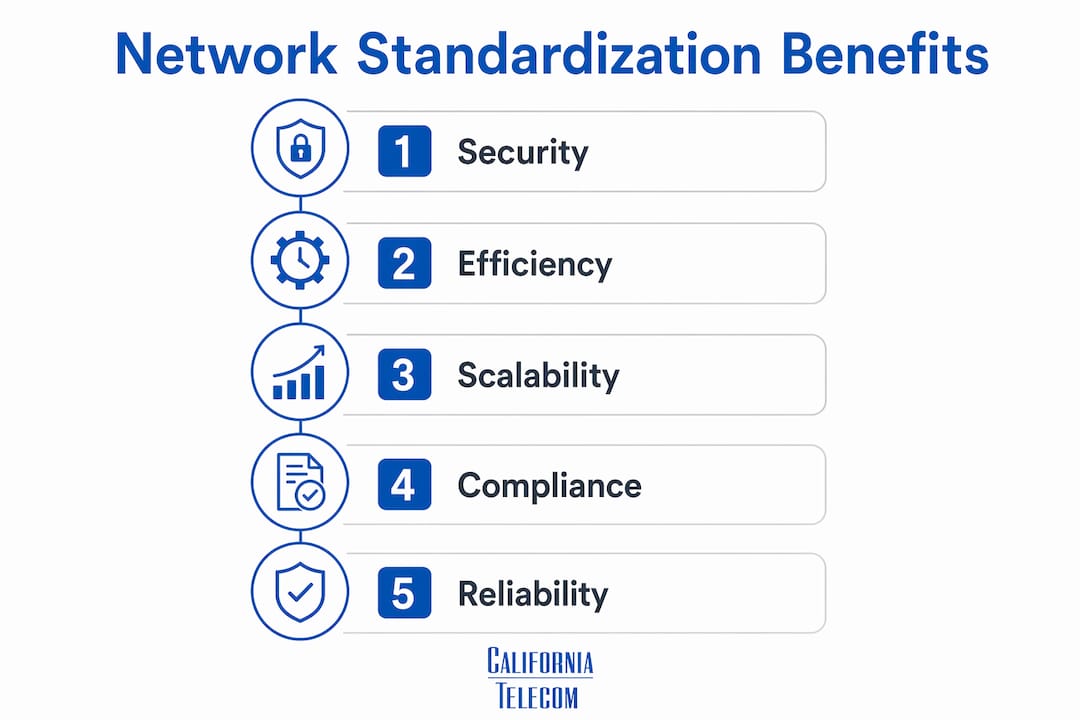
What does standardizing networks across an IDN actually gain you?
The legacy approach to patient monitoring, buying unit by unit or hospital by hospital, leaves a patchwork of platforms that IT teams struggle to secure and maintain. Standardizing across an integrated delivery network replaces that patchwork with a single, cohesive architecture.
The operational gains are concrete. Fewer servers and server licenses, fewer data closets, and potentially fewer network domains reduce both cost and attack surface. A single monitoring solution supports consistent data access for clinical teams and reduces manual entry errors on the floor.
- Reduced technical footprint: Fewer servers, gateways, and domains to build, patch, and manage
- Centralized management: Enterprise-wide tools for network health monitoring, troubleshooting, and asset tracking
- Consistent security policy: Unified patching schedules, certificate management, and firewall rules across all sites
- Scalability: Adding a new care site or incorporating a new location follows the same data standards and protocols already in place
- Equipment flexibility: Standardized devices can be shared across beds on the same domain during demand surges
- Training efficiency: Common device interfaces and workflows reduce onboarding time for clinical staff
- Interoperability gains: A single platform reduces the number of protocol gateways required and supports real-time data access across the enterprise
For multi-location enterprises, the private network options that underpin IDN standardization matter as much as the device layer itself.
How Californiatelecom supports medical device networking for healthcare enterprises
Californiatelecom designs and deploys managed network infrastructure specifically for multi-location healthcare organizations, sourcing from 50+ carriers and backing every deployment with a 99.99% uptime SLA on data and 99.999% on voice. The 24/7 U.S.-based NOC provides continuous visibility into network health across every site, which is the kind of monitoring that catches a segmentation drift or a latency spike before it affects patient care.
For healthcare IT teams managing distributed device fleets, the single-provider model eliminates the vendor coordination problem. One bill, one engineering contact, and one NOC replace the operational drag of chasing multiple carriers when a site goes down at 2 AM. Californiatelecom's engineers handle managed LAN/WAN design and deployment, including the VLAN architecture, firewall policy, and wireless infrastructure that medical device segmentation requires.
- Multi-carrier sourcing: 50+ carriers give each site the best available connectivity without locking into a single provider
- Regulatory alignment: Network designs account for HIPAA requirements and FDA cybersecurity guidance on device isolation
- Scalability across locations: New sites deploy on the same architecture, protocols, and management platform as existing locations
- Cybersecurity posture: Segmentation, access controls, and managed IT security practices are built into the network design, not added afterward
- Real-world deployments: Californiatelecom's healthcare case studies demonstrate network standardization and segmentation across enterprise health systemsHealthcare enterprises managing device networks across multiple locations can reach Californiatelecom's engineering team through the healthcare network services page for a scoped consultation.
How do you plan for network failures affecting medical devices?
Network failures in clinical environments carry patient safety consequences that IT outages in other industries do not. A dropped connection to a central monitoring station or a blocked alarm pathway is not just an inconvenience. Risk management for medical device networks requires redundancy and a tested contingency plan, not just a backup policy document.
Redundant communication paths are the starting point. Critical device zones, particularly bedside monitoring and telemetry, need automatic failover so a single link failure does not interrupt alarm feeds. Quality of service (QoS) policies prioritize medical traffic over administrative traffic during congestion events. Beyond the infrastructure layer, healthcare IT teams need rollback procedures for any segmentation change that begins dropping alarm or telemetry traffic post-enforcement. Staged rollouts with a monitoring-only period before enforcement give teams a safe window to catch policy errors before they affect care. Centralized systems are also easier to back up and recover when problems occur, which is one of the practical arguments for IDN-wide standardization over fragmented, unit-by-unit deployments.
How do you scale medical device networks across multiple locations?
Scaling a medical device network across new locations is straightforward when the architecture is standardized and fragmented when it is not. The shared infrastructure of a standardized, connected solution allows health systems to add monitors to an existing care site or incorporate a new location onto the same platform without requiring a new interoperability standards review for each addition.

The forward-looking infrastructure decisions involve wireless technology and edge computing. 5G medical connectivity has improved transfer speeds significantly over prior generations, but deploying it into a hospital requires RF site surveys, coexistence testing, and phased migration. Edge computing reduces latency for real-time monitoring by processing data closer to the device rather than routing everything to a central cloud. For multi-location enterprises, the practical path is establishing a standard network architecture at the first site, validating it against clinical workflows and regulatory requirements, and then replicating that architecture at each subsequent location. Every new site that follows the same VLAN structure, protocol stack, and management platform reduces the total cost of ownership and keeps the security posture consistent across the enterprise.
Key Takeaways
Medical device networking requires segmentation, flow mapping, and standardized protocols working together to deliver reliable, secure connectivity across multi-location healthcare enterprises.
| Point | Details |
|---|---|
| Segmentation is the foundational control | HICP Practice 9.3 requires medical devices on dedicated network segments with default-deny traffic policies between zones. |
| Flow mapping must precede enforcement | Baseline traffic capture per device class prevents segmentation from silently breaking alarm and clinical data pathways. |
| Interoperability gaps carry real costs | Only 43% of U.S. hospitals complete all four interoperability functions; fragmented systems cost the industry over $8 billion annually. |
| IDN standardization reduces complexity | A unified monitoring architecture across an integrated delivery network means fewer servers, consistent security policies, and scalable deployment at new sites. |
| Single-provider management reduces operational drag | Californiatelecom's managed network model gives healthcare enterprises one bill, one NOC, and one engineering contact across all locations. |